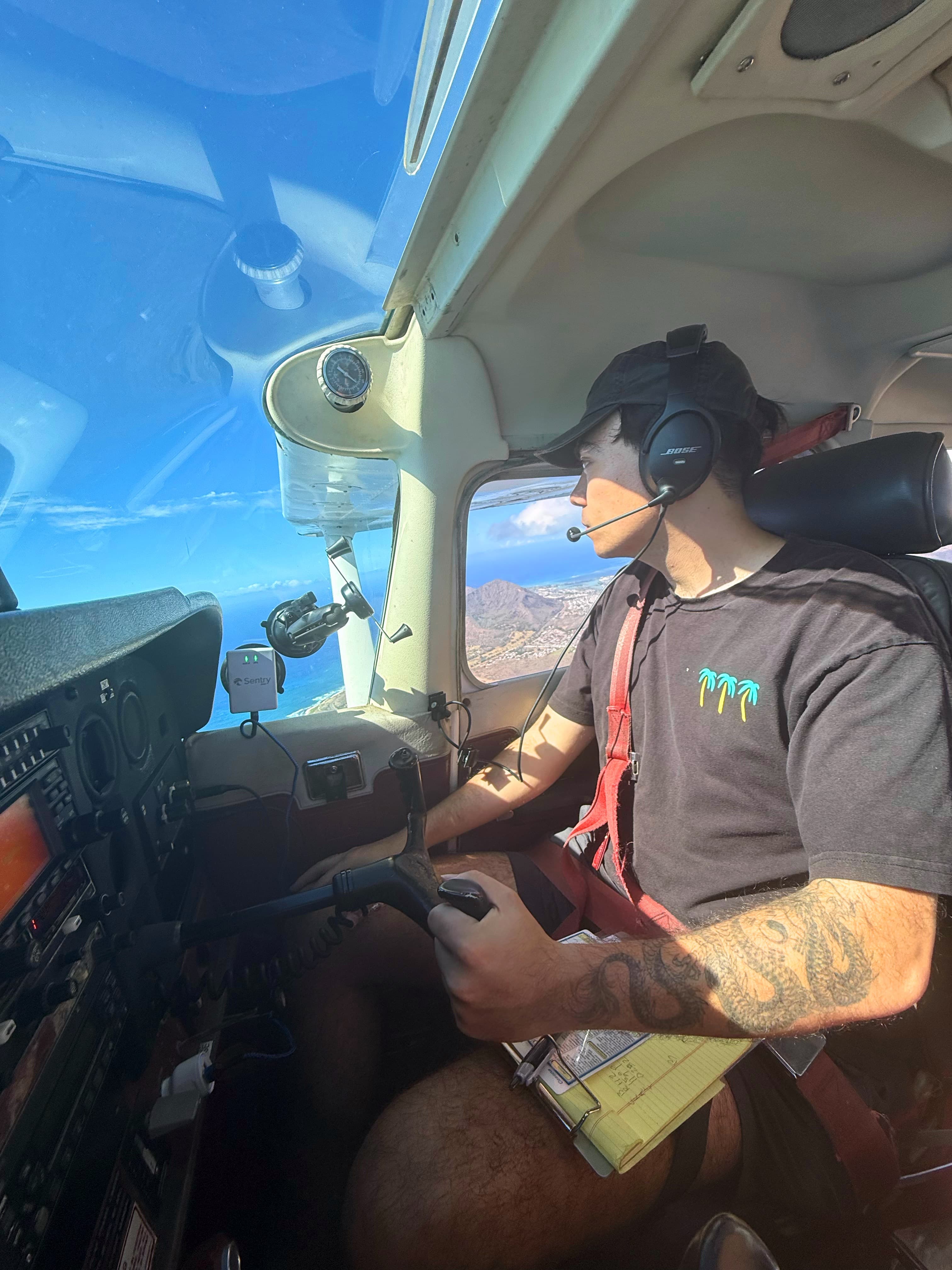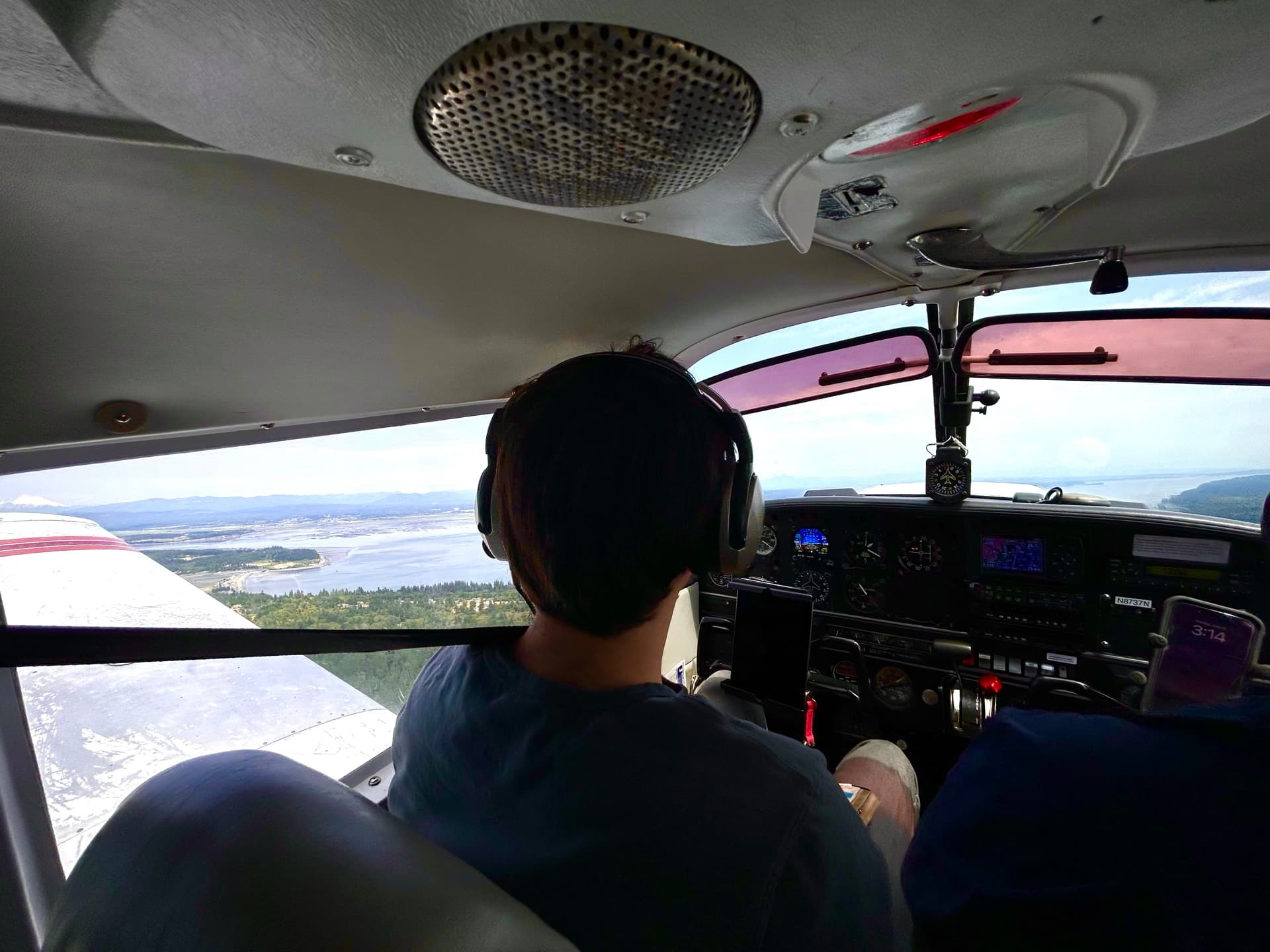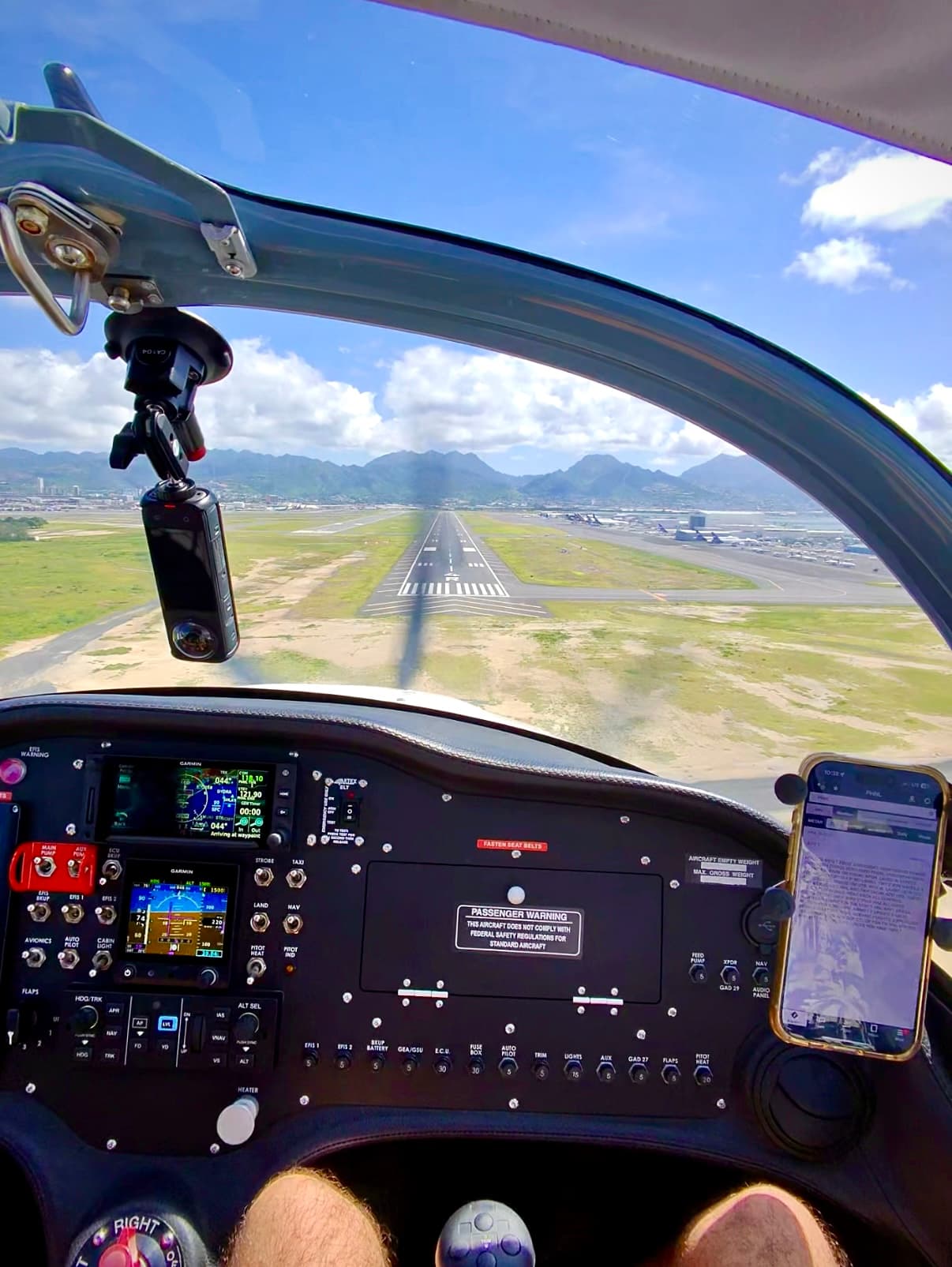
A prospective student searches "discovery flight near me" at 10pm on a Tuesday, clicks the first three results, and decides in about ninety seconds which one they trust enough to hand over a credit card. Your discovery flight landing page has one job: be the page they trust. Most flight school discovery pages do not do that job. They read like a brochure, bury the price, hide the schedule, and ask the student to call during business hours.
What the page has to do in three seconds
Before anything else, the visitor needs to know three facts: what a discovery flight is at your school, what it costs, and how to book one. If they have to scroll or click to find any of those, you are leaking conversions to the next school on the results page. Above the fold — the portion visible without scrolling on a phone — you want a clear heading, a one-sentence description, a price, and a booking button. Everything else is supporting evidence.
The content blocks that actually convert
Once a visitor is past the hero, they are scanning for the same small set of answers. Build the page around those questions in roughly this order:
- Price and what is included. Say the total. If it is $199 for a 30-minute flight, say so. Mention whether the price includes ground briefing, fuel, and a logbook entry. Ambiguity at this step kills bookings.
- What actually happens. A short step-by-step: arrive, meet the CFI, walk around the aircraft, fly, debrief. First-timers are anxious and need a map of the experience.
- What to bring and wear. A checkride-style list reduces friction. Sunglasses, closed-toe shoes, government ID — nothing dramatic.
- Who the CFI is. A headshot and a one-paragraph bio. People book people, not LLCs. This is the single most-skipped trust signal on flight school sites.
- The aircraft. Make, model, tail number, a real photo of the actual plane, not a stock Cessna from Unsplash.
- Social proof. Three to five recent reviews from Google or Facebook, pulled in live. Testimonials hand-typed into the HTML look fake and they are.
- FAQ. Weather cancellation policy, age/weight limits, whether they will "fly the plane" (they will), whether it counts toward a rating (it does), gift certificates.
- Booking. An embedded scheduler, not a phone number.
Trust signals that matter — and ones that do not
Real signals: a recent Google review count and star rating, a photo of the actual instructor next to the actual aircraft, years in operation, Part 61 or Part 141 status stated plainly, and a visible physical address at a real airport (with the ICAO identifier — KHNL, KSNA, etc.). Fake-feeling signals: generic "5-star service" graphics, stock images of pilots in unrelated aircraft, vague "award-winning" claims with no citation, and a testimonial carousel with no names or dates.
“I have watched schools with worse aircraft and fewer hours of instruction out-convert better schools purely because their discovery flight page answered the anxious first-timer's questions before they had to ask.”
— Nathan Van Kempen, CFI
The scheduling step — where most schools lose the booking
If the call to action is "Call us to book your discovery flight," you have just lost every visitor who is on your page at 10pm. The realistic options are an embedded scheduler (Flight Schedule Pro, Calendly, Schedulicity, or a purpose-built booking flow), a short form that collects name + phone + preferred dates and sends an email, or a direct Stripe checkout with a follow-up to pick a time. The embedded scheduler converts best because it removes the "what if they do not call me back" doubt entirely.
If you cannot stomach live online booking — because you genuinely need a weather check before confirming — use a two-step flow: collect the booking request online, then confirm by text within a few hours. Do not make the customer do the chasing.
What to measure
- Page conversion rate — visitors who reach the page versus visitors who submit a booking. In our experience, a discovery page converting under 3% of healthy SEO traffic is usually the page, not the traffic.
- Time-to-book — from landing on the page to submitting the form. Long times suggest confusion; very short times suggest intent was already high and the page just needed to not get in the way.
- Cancellation rate — if it is high, the page is over-selling or under-explaining. Most cancellations trace back to a mismatch between expectation and reality.
- Review capture rate — percent of completed flights that lead to a Google review. We have seen a well-timed post-flight email sequence push this over 30%.
A note on mobile performance
Most discovery flight traffic is mobile. If your page takes more than two seconds to show the booking button on a phone, half your visitors are gone before they see it. Compress your hero image, delay loading the review widget until scroll, and put your scheduler embed below the fold so it does not block first paint. A fast, honest page beats a slow, polished one every time.
The discovery flight is the most important page on a flight school site. It is where intent is highest, decisions are fastest, and the first dollar of lifetime value is earned. Treat it that way. See our Pacific Flight Academy case study for a discovery page built to this blueprint, or read how we scope lead-generation projects.