A charter customer does not buy the way a tour customer buys. The decision involves a flight department, an executive assistant, sometimes a procurement officer, and often a broker. The same person might be quoting three operators at once, reading your website during a 20-minute window between meetings, and deciding whether you make the shortlist based on whether your fleet page answers real questions. Charter websites are an inquiry funnel, not a storefront — and the ones that consistently win book-of-business work are designed for exactly that.
The inquiry is the product
For a Part 135 operator, every page on the site is working toward a single conversion: a qualified inquiry. That is not the same as a booking. A qualified inquiry means the person submitting the form has a real trip, the right decision authority, and enough budget that the trip is flyable for you. The website's job is to filter for those people and make the inquiry step frictionless for them — not to try to close the sale online.
Fleet pages that earn trust
The fleet page is where serious charter customers form their first real impression. Surface-level fleet pages — a photo, a model name, a "seats 8" caption — tell the customer you do not understand what they need. A fleet page that earns trust includes:
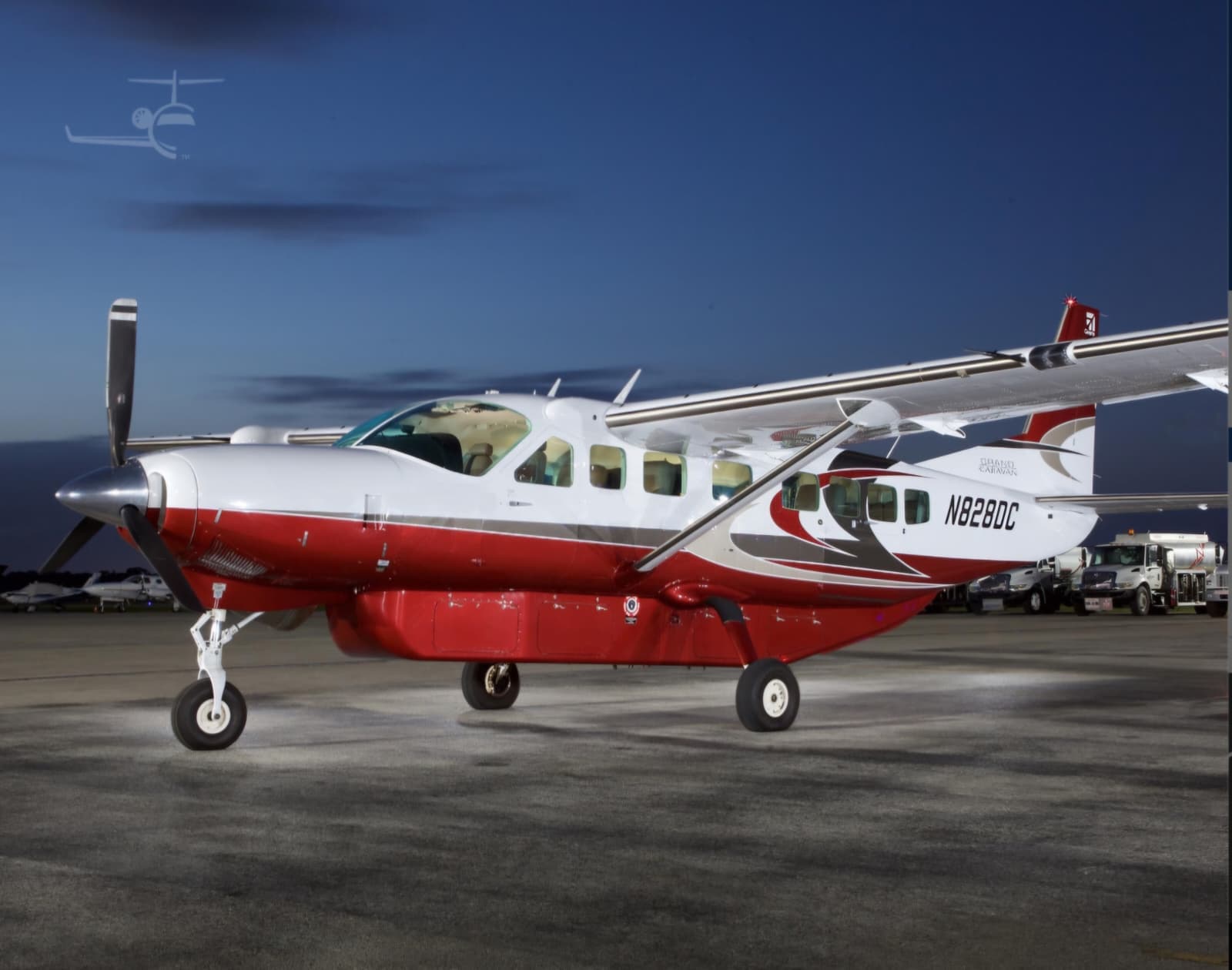
- Tail number for each aircraft. A broker can verify your registration in 30 seconds on the FAA registry. Schools with nothing to hide display the N-number plainly.
- Real specs. Range, cruise speed, typical block time on common routes, cabin dimensions, baggage capacity.
- Cabin configuration photos. Interior shots, not just a hero exterior. Customers care about legroom and lavatory more than they care about paint scheme.
- Certification and equipment list. RVSM, transoceanic, specific avionics where relevant. A charter broker reading the page knows exactly what matters for their trip.
- Home base and positioning disclosure. Where the aircraft lives. Whether there is a positioning fee for common trip origins.
Safety record and certifications — visible, not buried
Part 135 certificate number. ARGUS, Wyvern, or IS-BAO rating if you hold one. Training partner (FlightSafety, SimCom, CAE). These are not decorative badges — they are the shorthand a corporate flight department uses to decide whether you make their approved-vendor list. Hiding them in a footer or a PDF costs you inquiries from exactly the customers you want most.
“The charter customer who matters most is the one who already knows what RVSM and ARGUS Gold mean. Your website has to sound like it knows too — or the inquiry goes to the operator whose site does.”
— Nathan Van Kempen, CFI
Crew bios are a trust multiplier
A short bio for each captain — total time, type ratings, time in type, military or airline background where relevant — does more to close a qualified inquiry than any amount of stock photography. Charter customers are flying with people, not logos. The bio does not need to be long; it needs to be specific and verifiable. First name plus last initial is fine if privacy is a concern.
The quote workflow — not a shopping cart
Do not try to quote charter prices online. The price depends on origin, destination, passenger count, overnight status, positioning, handling, and a dozen other variables. A quote calculator that shows a number creates false expectations; a form that collects the inputs and returns a quote within an hour creates a real conversation.
The effective quote form asks for: route, dates, passenger count, contact info, and a free-text box for notes. That is it. Do not ask for company name, job title, phone preference, or how they heard about you on the first step. Every optional field is a drop-off.
What NOT to do — avoid tour operator patterns
- No countdown timers. "Book within 15 minutes!" is fine for a helicopter tour; on a charter site it reads as unserious.
- No live booking calendar. Availability depends on positioning; showing a calendar invites confusion.
- No "book now" button on the fleet page. "Request a quote" is the correct CTA. Every time.
- No carousel of testimonials. If you have real customer quotes, put them in context on the relevant page — do not turn them into a scrolling banner.
- No stock photography of aircraft you do not operate. This is the single fastest way to lose a serious customer.
What success looks like
Qualified inquiries per month, quote-to-contract rate, and average trip value per inquiry are the metrics that matter. In our experience, a charter site generating 8–15 qualified inquiries a month from organic search with a 25–35% conversion to contract is doing real work. Higher volume at lower quality is not a win — filtering out tire-kickers is half the job.
For a production example, see our Royal Pacific Air case study, or read more about how we scope charter operator projects.